Monday, August 29, 2011

The Return

My parents' deck in Missoula, Montana 

March! I last posted in March! That's mind-blowing. So much has happened. I moved into my new apartment and unpacked my gear in my snazzy new home office (pictures forthcoming). I had a lovely fruitful summer captioning classes for medical school, art school, architecture school, a dental school admissions test prep class, and even two action-packed days at the United Nations. I also did a ton of medical journal transcription and captioned a few great plays, like Measure for Measure at Shakespeare in the Park. And, of course, as always, I captioned That Keith Wann Show every Wednesday night at 8:00 p.m. EST. I also spent the summer polishing up my Python programming skills by taking some classes from Codelesson and rallying support behind the scenes for the next exciting phase of The Plover Project. Now it's the end of August, and my regular fall semester CART schedule starts in just a few hours. It was supposed to start yesterday, but the storm postponed it by a day. It's so strange to think that my working-at-home days are done for now, and I'm going to be almost entirely onsite (at two or possibly three different colleges) until December.

There was so much I wanted to get done this summer! Blogging, writing articles for StenoKnight.com, improving my ASL skills (I've been on hiatus since January, but I'm planning to start up again in a month), all sorts of important and improving activities. But when I wasn't working or doing Python homework, I found myself mostly doing fun stuff instead. Hanging out on Turntable.fm (I'm addicted to the "Classical of Any Kind" room); working out with EA Sports Active on my new Wii; having picnics with my partner in Fort Tryon Park; floating down the Clarkfork River in Montana for my brother's birthday; reading tons of ebooks on my Droid 2; and generally having a delightfully mellow and delightful time of it. So I wasn't quite as active on the internet as I might have been, but I'm going back to work feeling happy and refreshed. My schedule still isn't completely nailed down yet -- a common hazard of CART providers, though worse this year than ever -- but once it is, I'm going to go to that list of blog topics I drew up a few weeks ago ("How to CART a Latin class"; "The Guild System versus the Firm System in the Economics of Captioning"; "Why a 4G modem is a Walkaround Captioner's Best Friend"; "What Do You Do With a 2-Pound Roll of Gaffers Tape?"; et cetera) and try to whittle down some of the backlog. The summer can't last forever, y'know. It's time to get down to business.


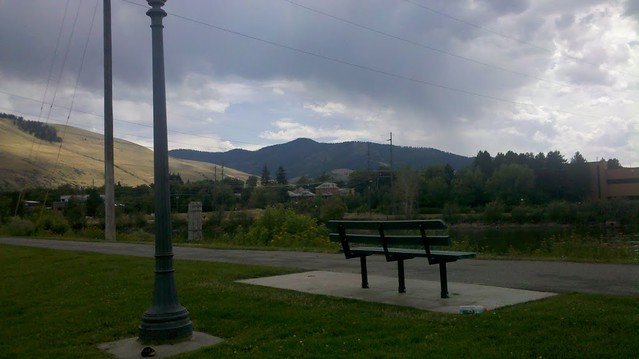
A bench overlooking the Clarkfork River

Thursday, March 31, 2011

How Coworking Saved my Home Life


The floor plan of my current apartment

Manhattan apartments are famously small. Mine has a bedroom, a bathroom, a short hallway, and another room that we use as our kitchen, living room, dining room, music room, and office. The office part consists of a tiny IKEA desk perched in the corner next to the fire door, between my partner's synthesizer keyboard and the futon mattress that serves as our couch. There's enough room for me, a chair, and my steno machine, but not much else. This setup was more or less okay during the school year, when I mostly worked onsite at the various universities I CARTed for, but in the summer, when the CART work was on hold and I spent my days doing (more time-consuming, less lucrative, but readily available) offline transcription work, things occasionally got a little tense.
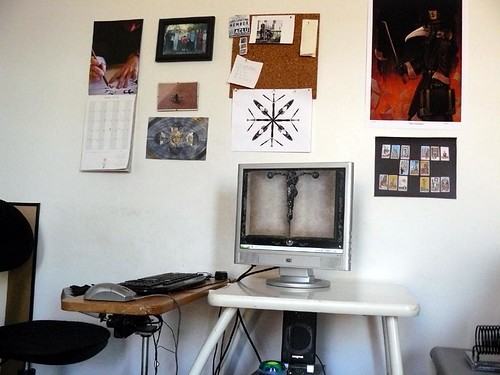

My desk, sandwiched between the piano and the fire door

Yes, there are definite advantages to working at home. I didn't have a dress code. I could raid the fridge between jobs. The cat was always eager to help with administrative tasks, especially if they involved crinkly paper. And, naturally, that famous old work-at-home chestnut, the 10-second commute. But over the course of a long, sticky summer, when it was just me and my machine on the same 2 x 2-foot patch of floor day after day -- or, on days when my partner wasn't working, the two of us trying to give each other a little space without overheating physically or mentally -- I started hankering for an offsite office.

Coworking is a relatively new concept, but it's caught on with small businesses and self-employed workers in many cities around the world. Essentially, it's just an affordable way to duplicate the amenities of a home office in a semi-public arena, to lessen the isolation and fuzzy work/life divide that can affect people confined to home offices. Choosing a freelance life over a full-time job means a good amount of autonomy, but many people miss the camaraderie to be found working alongside the same people every weekday. Coworking is an attempt to solve that problem.

It wasn't until the fall of my third year as a CART provider that I finally found my coworking co-op. When out in the field and between classes, I had been doing my transcript editing, class prep, and other unbillable work either in campus libraries or in various coffee shops nearby. Two of the universities I CARTed for offered free internet, and I was still new enough at freelancing that the idea of sitting down with a frothy drink and an apple turnover before taking out my steno machine for some transcription work seemed incredibly decadent and cool. I still enjoy working in coffee shops occasionally -- especially since getting my wireless 4G modem, so I'm not forced to stick to the ones that offer free internet -- but eventually the novelty started to wear a little thin. For one thing, the choice was always between refilling my glass every hour or being a freeloading jerk, and sometimes my workload outlasted either my appetite or my wallet. Also, if I ever wanted to take a phone call or go to the bathroom, I'd have to pack my gear into my backpack and take it with me, then unpack it all again when I got back -- even assuming the seat I'd left was still open. This wasn't a big deal when I was just editing transcripts on my laptop, but when I got a year-round transcription client that began sending me new audio files four or five days a week, it was a lot more cumbersome to juggle my laptop, steno machine, foot pedal, and bulky can headphones every time I felt like getting up.

Still, I was balancing things pretty well between campuses and coffee shops until I got a job at a new university that didn't offer free internet access and wasn't willing to give a registration code to an independent contractor like me. To make things worse, the only place nearby that offered WiFi was McDonald's; there wasn't a coffee shop for blocks. I knew that a regimen of daily cheeseburgers wouldn't do me any favors in the long run, so I went looking for other options. At that time, the only wireless modems on the market were 3G, not really quick enough to do what I needed, so I went online to see if there was any cheap office space available in the area. To my surprise and delight, I discovered Common Spaces, a coworking co-op, only two blocks away! For $200 a month, I could get the use of a desk, high speed internet, a laser printer/scanner, a kitchen, a couch, a roof garden, a conference room for client meetings, the vicarious productivity of a few dozen coworkers, and all the free coffee I could drink. Who could say no to that?


Two of Common Spaces' many seating options.

I signed up that fall and adored it immediately. My coworkers were fascinating entrepreneurs and freelancers, with businesses ranging from green roof landscaping to web design to miniature cupcake manufacture, and just having people around me working diligently seemed to dampen my impulse to procrastinate. Best of all, none of those people were either my boss or my underlings, and I didn't have to answer to any of them. It had all the advantages of a traditional office, without any of the stifling elements that drove me to freelancing in the first place. I spent two semesters happily moseying between the university and the coworking space, but then both of my clients graduated, and I got a CART assignment at another university about a 15-minute walk away. Spring semester was over by then, and I briefly debated the idea of giving up the space and going back to the desk in my living room, but I just couldn't stand the thought of yet another summer crammed into a corner. For the next four months, I used the high speed commercial broadband at Common Spaces for nabbing dozens of per diem remote CART jobs, for writing new posts on the StenoKnight webpage, for doing my transcription work without feeling like I was bothering anyone with my sprawling setup, and of course, for working on Plover. A month after moving into Common Spaces, I'd posted an ad on the elevator's corkboard asking for Python lessons. That posting eventually turned into a collaboration between me and a freelance programmer who was working in a different co-op on a different floor of the building. Weekly Python lessons turned into weekly development sessions, and the world's first open source steno software was born. Even if I'd gotten nothing else out of working there, finding Plover's programmer was more than worth the rent.


The roof garden at Common Spaces

Summer changed to Fall, and Fall to Spring, and I kept enjoying the benefits of coworking. Instead of coming home after CARTing the day's classes and flomping on the futon mattress for several more hours of work, I was able to get my work done at the office, then come home and help with dinner or just hang out, without the ever-expanding bubble of my freelancing schedule constantly threatening to engulf the rest of my life. I got a steady remote CART client, which made me very grateful that I could use the office's rock solid internet connection instead of my apartment's unpredictable cable modem. I enticed a consultant friend to sign up for flex space too, so we could eat lunch together and occasionally talk shop; we're in totally different industries, but many parts of freelancing are universal. The office was a lifeline to me, and my job would have been unspeakably harder without it.

But...

You probably sensed that "but" coming, didn't you? Today I paid my last monthly check to Common Spaces for the time being. Why? Because today I also signed a lease on a new two-bedroom apartment. Yep, I'm rejoining the ranks of the working-at-home. The last few years have been good ones, and I'm finally able to afford more than a three-room apartment. The new place has a living room that's just a living room, a kitchen that's just a kitchen, and -- I can hardly believe it -- an office that's just an office, with an actual door and everything. My remote CART work looks like it'll be moving to five days a week for the next few months, and it'll be nice to get out of bed at 7:20 a.m. instead of getting up at 6:00 (5:00, before the recent Daylight Savings switchover) and dashing for the train down to Brooklyn. I'm curious to see how much of a difference it'll make to have a room with a door, whether I'll be able to delineate my work life and home life or whether they'll start creeping back into each other. I know I'll miss my coworkers, the beautiful roof garden, and the vermicomposting bin I set up last May and have been maintaining with kitchen scraps ever since. In a way, I'm sure I'll also miss my one-hour one-way commute, which gave me time to read novels or listen to podcasts without worrying that I should be working. But having a dedicated desk with two monitors and all my stuff set up the way I like it will be a nice change from carrying all my gear on my back every day. (Common Spaces has a dedicated desk option, but it's double the cost of flex space.) Plus it looks like my next couple years of onsite CART will largely be centered around The Bronx, so keeping a home base in Brooklyn makes less sense than it did when I was working at several schools that were all a few subway stops from the co-op.

So once I get my home office set up the way I like it, I'm sure I'll post some pictures. I might drop by Common Spaces just to visit, and who knows? Maybe someday I'll even renew my membership. But whatever happens in the future, coworking has been an invaluable experience for me, and I can't recommend it highly enough.

Tuesday, March 22, 2011

How to Fail at Social Media

Step 1: Get a blog.

Step 2: Start writing on the blog, promising to update it regularly with entertaining tales of your work life, advice to aspiring students, and essays on the importance of coalition-building and advocacy.

Step 3: Receive emails (all of them informative, interesting, and encouraging) about recent blog posts.

Step 4: Freeze.

Step 5: Begin letting emails pile up. As they accumulate, become more and more stressed out about not finding the time or the words to answer them.

Step 6: The weight of the many unanswered emails (some from several months ago) should now be sufficiently oppressive that you feel guilty even thinking about blogging, tweeting, facebooking, or otherwise interacting with the internet.

Step 7: Continue not answering them. Continue not blogging. Keep at a low simmer for several months.

Step 8: ?

--

Yep, that's about the state of things. Sadly, my StenoKnight-related output has sunk drastically from the halcyon days of NatCapVidMo. I've got emails in my "@reply" folder dating back to October. Yikes. I keep telling myself, "There are only 67 of them. Just answer about five a day, and you'll be done in less than two weeks." But then the new urgent emails come in, I answer those instead, and the old ones get postponed another day. The inertia of not blogging builds on itself, and the whole idea of participating actively in a public forum gets more intimidating the less I do it. It's a sinkhole I want to get out of, but can't quite figure out how.

I get caught up in the daily churn of editing CART transcripts, sending out invoices, transcribing mp3s for my medical journal clients, prepping play scripts for captioning, and CARTing at five different universities every week, often starting at 6:00 a.m. (at least it's not 5:00 a.m. anymore, since Daylight Savings Time kicked in and brought me back into alignment with the time zone of my Caribbean-based remote CART client) and finishing up at 10:00 p.m., then realizing that there's not much time left over. I've definitely gotten a lot better about getting transcripts and invoices done on schedule without procrastinating, which was something that overwhelmed me a lot when I first started out, but I'm still having trouble getting in the habit of snatching those few spare minutes at a time -- in the break between classes, on the subway, at night before turning in -- and using them productively instead of frittering them away on webcomics or random YouTube videos.

On the plus side, I've continued to read Twitter pretty regularly, even though I've been tweeting quite a bit less than I used to. And even though my @reply folder still stares balefully at me whenever I log in to Gmail, at least I've managed to achieve Inbox Zero consistently for the last several weeks, with everything tidied up and shunted into its own digital pile. But this morning on the bus to work I listened to the social media episode of Freelance Radio and decided that something had to change. This paralysis isn't useful. I'm still going to answer all those emails eventually, but I'm not going to let them keep me from blogging. In a few weeks, my CART work will start tapering off and I'll be ready to shift gears into summer. Hopefully I'll be able to post a few things before then, but if not, I'm definitely going to make a firm commitment to set a significant portion of my time aside for interacting with CART clients and colleagues, reading the latest Deaf/HoH advocacy news, and pontificating about all the interesting issues I encounter on the job. There are all too few of us CART/Captioning professionals and consumers blogging these days (shout-out to StenoRay, Norma, Michael Janger, ACS, I Heart Subtitles, and the CCAC), and I want to do my part to keep the conversation going.

Monday, January 17, 2011

The School of Stenotype Exclusively

In the last post, which I wrote as the fall semester was wrapping up, I wrote: "During my time off, I'm hoping to write more frequently on this blog, and I'd like to expand my website a bit as well."

Ha! My full spring semester starts tomorrow (One of the schools I work for started last week, so I've already CARTed two classes, but the rest of the week was fairly open, so I still felt like I was on vacation), and have I posted anything to this blog since then? Well, not until now, I haven't. Sigh. I was able to add an installment to Steno 101 over at the Plover Blog, and I have made a few subtle tweaks to the StenoKnight webpage (most noticeably to my resume), but this blog has been sadly neglected during my break. I had a lovely vacation, all in all. I did a lot of cooking, stayed up after midnight and slept in late, trudged blissfully through the snow-covered parks of Upper Manhattan, and read lots of novels without feeling guilty about putting off transcript editing.

As of tomorrow it's back to business, though, and I have a few ideas for long-form blog entries that are more like articles than the little dispatches I can bang out in half an hour or so, such as an essay on the guild model versus the firm model with respect to the future of CART, and my long-promised story of How Coworking Saved My Home Life. The trouble is that it's sometimes hard to fill the gaps between long portentous posts. The little one-liners go to Twitter or, more rarely, Facebook, and the longer stuff sometimes seems too intimidating to post without a lot of deep thought and careful polishing. So in the spirit of fluffiness, triviality, and hurriedly dashed-off blog entries, have a t-shirt.


I made this in August 2009, and as far as I know, I'm the only one who's ever ordered one, but I wear it all the time (only on my days off, of course; when I'm CARTing I always wear basic black), and it makes me grin whenever it comes up on laundry rotation. It's inspired by my steno school alma mater, which is currently called The New York Career Institute (a perfectly fine school, as steno schools go, but could the name be any blander?), previously called Stenotype Academy, and when it was founded, in 1941, was known as The School of Stenotype Exclusively, which is probably my favorite institutional name, bar none. Rather than buy generic NYCI gear, I figured I could make a better keepsake to help me remember my speedbuilding days. So there it is: A School of Stenotype Exclusively T-Shirt. I know Zazzle prices are a bit steep, but I didn't take any markup, so it's as about as low as print-on-demand t-shirts generally go. If you decide that you absolutely must wear such a thing, feel free to order one with my blessing! If not, forgive me if you meet me at a convention one day and I'm wearing mine. I just couldn't resist.

Monday, December 20, 2010

Winding Down, Gearing Up

Two of my the three colleges I worked at this semester are already on winter break, and I sent off their last 2010 invoice today. I've only got one regular CART class left in the semester. For the past two weeks, I've been doing much less academic CART work -- since most students had finals instead of class -- but I've been surprisingly busy for mid-December. On the 12th and 13th I captioned the annual Holiday Songbook for the New York Public Library for the Performing Arts, which was very cool; composers from all over the city were invited to submit new holiday music they'd written, for something like 40 songs in total over the two days. I was able to get some of the song lyrics in advance, and during tech runthroughs I was able to transcribe the rest of them so that when they were actually performed I could send them smoothly line by line instead of having to CART them live. The Library decided to try an experimental closed captioning system, where I sat up in the tech booth and sent the captions over the internet, while audience members went to the caption webpage on their phones and followed along that way. It went quite well, though this method certainly has its pros and cons. On the plus side:

* The event organizers were more comfortable with captioning being opt-in rather than having it visible to everybody.

* Several people -- including people of a somewhat older generation -- had their phones with them and were able to access the captions without any difficulty.

* This demonstration proved that captions can happen almost anywhere, even when a projector and screen are not available.

Of course, there are a few downsides to closed device-bound captioning over universal open captioning. Namely:

* The many glowing screens of patrons' phones can arguably be as distracting as the one glowing screen used in open captioning. Additionally, some people don't understand why the captioning is there, so they might assume patrons viewing captions on their phones are actually being rude and texting their friends, or even that they're pirating the concert.

* Not everybody with hearing loss who might be helped by the captions identifies that way; it takes an average of five years for someone with hearing loss to acknowledge the issue publicly or sometimes even to themselves. Some people might not even know that they have hearing loss, and open captioning can be a way of helping them realize how much they've been missing.

* Some people who could have taken advantage of the captions might not have had web-enabled phones, or might have been too intimidated by the prospect of navigating to a website on their phones.

* Open captions tend to be larger and more visible than hand-held device captions, which can often be a little too small to read comfortably. In addition, open captions tend to be in the same plane as the performer, while device captions require rapid adjustment between near vision and far vision as the patron looks from the performer to the caption screen and back, which can sometimes cause eyestrain and detract from the immersiveness of the experience.

* Closed device captioning only works when there's a reliable wireless internet connection or when people have fairly high-speed data plans on their phones.

So I obviously try to promote open captioning whenever possible, but it was cool to show the potential of closed device captioning, and I'm very glad that several patrons took advantage of it. So that was Sunday and Monday. On Wednesday I captioned the last new 2010 episode of That Keith Wann Show. Then on Thursday I open captioned a four-hour play Off-Broadway (Angels in America Part II: Perestroika), and on Sunday I made a new video for the open source steno software I've been helping to develop: Plover Speaks. The video demonstrates how people who are unable to use their voices to speak can use steno to communicate at a normal conversational pace. There are many people in this category: People who've had surgery on their mouth or throat; people who stutter; people who have autism; people with hearing loss who don't want to rely on an ASL interpreter or CART provider -- the list goes on. I'm really excited about the new version of Plover. We've got 40 people in the Plover Discussion Group and we're constantly working on improving it and adding new features.

Things are slowly starting to get a little less hectic, though I've got a few more jobs planned for this week, and I've still got to clean out my email inbox and finalize my spring schedule before I can truly relax and enjoy my vacation. During my time off, I'm hoping to write more frequently on this blog, and I'd like to expand my website a bit as well. So if any of you have questions about CART, captioning, freelancing, learning ASL, developing open source software, or living in New York City, write me at info@stenoknight.com and I'll happily devote a blog post to answering whatever you'd like to know.

Wednesday, December 8, 2010

StenoKnight Demo Video Getting Around


O'Malley Interpreters, an agency offering BSL interpreting, CART, captioning, and lipreading in the United Kingdom, has posted a clear and thorough explanation of CART on their website, including StenoKnight's own CART demonstration video, which you can see here and on my own demo page. I was hoping that this video would be helpful to other CART providers in explaining what CART looks like and how it works, and I'm happy to see that it is. Thanks, O'Malley, for spreading the word about CART and captioning; it's got a fairly low profile here, but from what I've heard it's even less well known in the UK. Good luck to you. And for all other CART providers, please feel free to use this video in any way that you like. Our biggest challenge as a service profession is lack of awareness, but I think we can begin to change that by boosting our visibility whenever possible, both on the internet and in our daily lives. CART consumers, you're of course also always welcome to use this video as a demonstration of what instant realtime verbatim transcription can do for you and other people with hearing loss. (And for kids, English language learners, people with ADHD, dyslexia, auditory processing disorders; the list goes on.)

While I'm at it, a great place for providers and consumers to work together on CART and captioning advocacy is the Collaborative for Communication Access via Captioning, otherwise known as the CCAC.


Consumers who join the CCAC are eligible for one hour of free CART per year from CCAC provider members. I've been a member for quite a while now and haven't gotten a chance to donate my free hour yet, so if you live in the New York City area or could use an hour of free remote CART, join today!

Monday, December 6, 2010

NatCapVidMo Wrap-Up Post

Here's a link to each of the 30 videos I did over the month of November. As of December 6th, 2010, all of these videos are live, though of course there are no guarantees that anything uploaded to YouTube will stay online indefinitely. If any of these links break, please let me know about it: info@stenoknight.com. Thanks again to Universal Subtitles for their amazing captioning tool, and if anyone else would like to attempt to caption 30 videos in 30 days, go for it! I'd love to see this idea catch on.

Introduction to NatCapVidMo

Day 1: Transcription and Translation
3D animation of how DNA is read and how ribosomes make proteins.

Day 2: The Vogelkop Bowerbird
Snippet of a BBC nature documentary with David Attenborough.

Day 3: That Keith Wann Show Information
Silly promo for That Keith Wann Show (Captioned every week by StenoKnight CART Services, 8:00 pm to 9:00 pm EST!) featuring ASL comedian Windell Smith.

Day 4: That Man
Music video for Caro Emerald's song That Man.

Day 5: Gerald McBoing-Boing
Animation of Dr. Seuss's book Gerald McBoing-Boing, filmed in 1950.

Day 6: Life of a Freelancer
A wry look at the foibles of freelancing by The Free Love Forum.

Day 7: The Shakespeare Sketch
A meeting between Shakespeare and his editor, played by Hugh Laurie and Rowan Atkinson respectively.

Day 8: Sleight of Hand
The essential tricks used in sleight of hand magic, as narrated by Penn Jillette and demonstrated by Teller.

Day 9: Crazy
Music video for the Gnarls Barkley song Crazy, interpreted into ASL by b. storm.

Day 10: The Mimic Octopus
Brief nature documentary on the many guises of the Indonesian mimic octopus.

Day 11: Visual Illusions
A video about visual illusions used in a college class that I CARTed, which gave my client equal access to that day's lecture and follow-up discussion.

Day 12: Feynman on Fire
Richard Feynman, Nobel Prize-winning physicist, explains what fire is and how it works.

Day 13: Foux du fa fa
Music video by Flight of the Conchords, with two Universal Subtitles language tracks: English and French.

Day 14: The Antikythera Mechanism
Brief explanation of the Antikythera Mechanism and demonstration of a modern replica in action.

Day 15: Molecular Gastronomy
Explanation of the whimsical science-based philosophy behind Moto, a restaurant in Chicago.

Day 16: Out of Sight (With Audio Description)
Animation about a little girl who wanders into a strange world, with both captions and audio description.

Day 17: Lunokhod-1
News report about the 40th anniversary of Lunokhod 1, the Russian moon rover.

Day 18: The Flashlight Toothbrush
The Stupid Inventor demonstrates how to construct a combination flashlight and toothbrush, should you ever want to do such a thing.

Day 19: Work It Out
Music video for RJD2's song Work It Out, featuring dancer Bill Shannon.

Day 20: Science Tricks for Parties
A few cool things you can do with household objects to amaze your friends and mystify your science-hating enemies.

Day 21: Engineer's Guide to Cats
Explanation of the cat-human interpersonal dynamic from an engineer's perspective.

Day 22: Why Can't We Walk Straight?
Animation of a program on National Public Radio about why blindfolded humans never walk in straight lines.

Day 23: Greubel Forsey
Brief segment on the design and manufacture of Greubel Forsey wristwatches.

Day 24: Signs of Our Ideas
Announcement of a contest by ASL storyteller Peter Cook, challenging Deaf and Hearing people alike to think up a new ASL sign for the concept of "poverty".

Day 25: Missoula Parkour
Explanation of the principles behind parkour, accompanied by brief clips of the Missoula Parkour Group.

Day 26: Organic and Polymeric Semiconductors
Scientists discussing the great potential of organic and polymeric semiconductors in making the extraction of energy from the sun vastly more convenient and efficient.

Day 27: Traditional Hand Signs
Explanation of traditional hand signs from the Australian Walmajarri people, by artist Clifton Bieundurry.

Day 28: Refreshabraille 18 on the iPod Touch
Explanation of how to link the iPhone or iPod Touch with the Refreshabraille 18, with a transcript of the captions posted below the video.

Day 29: Linda Buys a Hat
Brief story from Sesame Street in which Linda Bove buys a hat. In English and ASL/PSE, with captions for both.

Day 30: Probing Platypus Evolution
Light-hearted look at the Australian platypus and an investigation into its genome.